Discover the heritage, craftsmanship and adventure of traditional Irish rowing — and experience it for yourself at HQ20
For more than two thousand years, the currach has held a unique place in Ireland’s story. Light, strong and remarkably adaptable, these iconic boats carried generations across rivers, lakes and open sea — shaping the way people lived, worked and connected. Their origins stretch deep into early Irish mythology and medieval manuscripts, where currach‑like vessels appear in tales of travel, exploration and survival. Even Roman writers noted the use of skin‑covered boats along the Atlantic edges of Ireland and Britain.
Traditionally built from a flexible wooden frame covered in animal hide (and later tarred canvas), the currach was perfectly engineered for Ireland’s rugged environment. Its light weight meant it could be lifted to shore, launched through surf, and handled confidently in unpredictable water. On the west coast, broad sea‑going currachs battled Atlantic swells; inland, slender river currachs skimmed along the Shannon and other waterways. For centuries, these boats were central to daily life — used for fishing, carrying goods, visiting nearby islands and maintaining vital links between remote communities.
Although modern boats eventually took over commercial work, the currach never disappeared. Instead, it was kept alive within coastal villages, passed from boatbuilder to apprentice, and celebrated in community regattas. Today, currach rowing is experiencing a powerful revival — a cultural touchstone, a sport, and a hands‑on way to reconnect with Ireland’s maritime past.
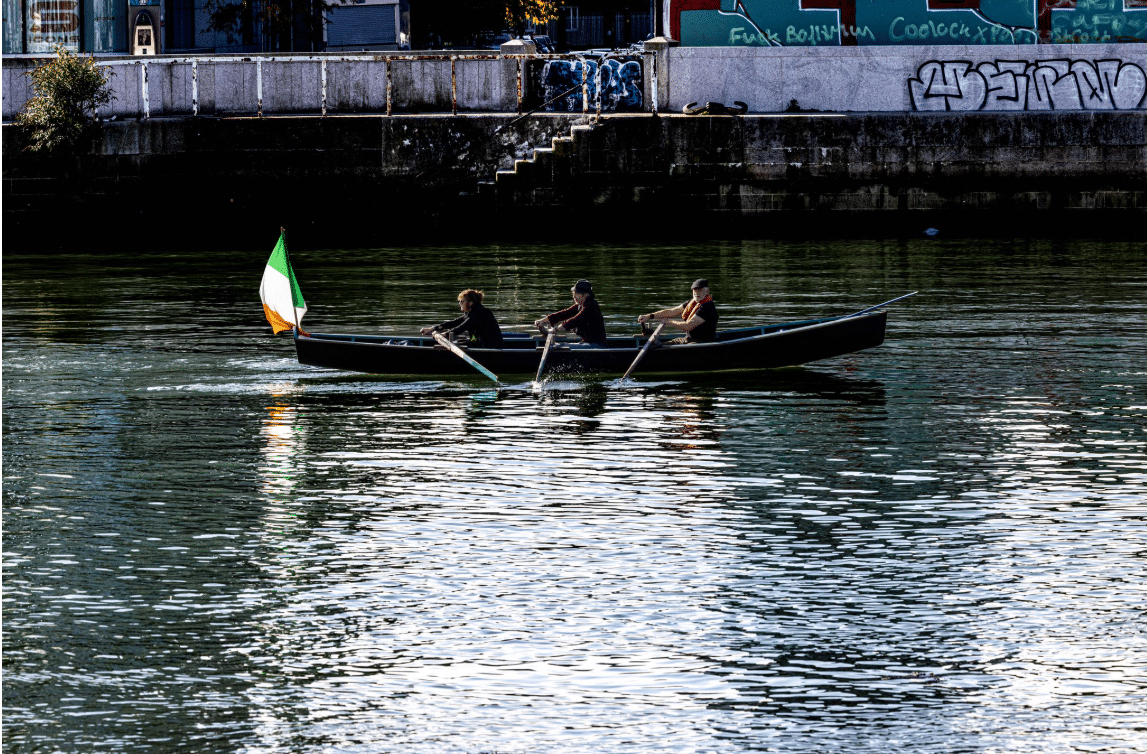
As part of our preparations to bring watersports to the people of Dublin we commissioned the construction of four traditional Irish currachs. Each was hand-crafted in Connemara, with the final stages of the build taking place on-site at HQ2O—through Irish. These are available now to use in our Currachí na Lífe program.
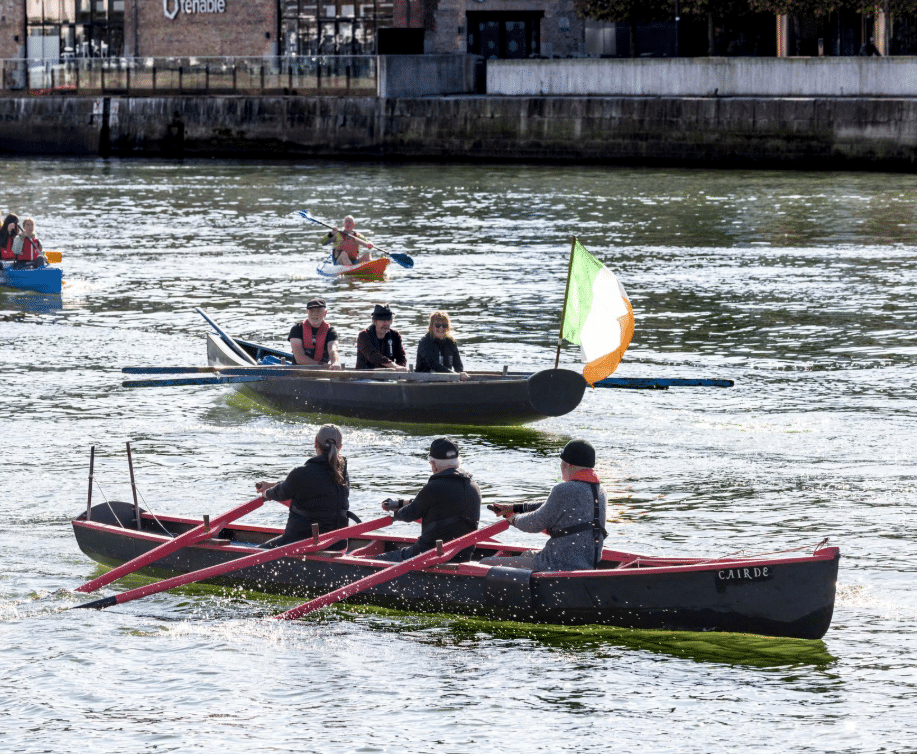
Experience Currachs at HQ20: A Living Tradition on the Liffey
Currachs offer something genuinely unmatched:
For locals: a powerful heritage experience and a new way to enjoy your city.
For tourists: a truly Irish activity — more than sightseeing, it’s storytelling.
For schools: hands‑on learning combining history, craft, language and physical activity
For families and groups: an exciting, accessible water adventure
For rowing or fitness fans: a flowing, rhythmic movement unlike any other craft